Introduction
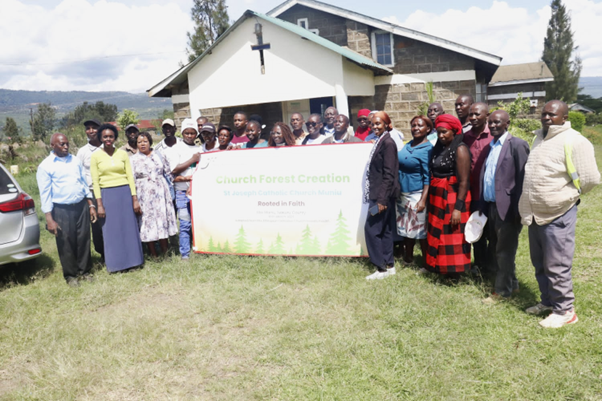
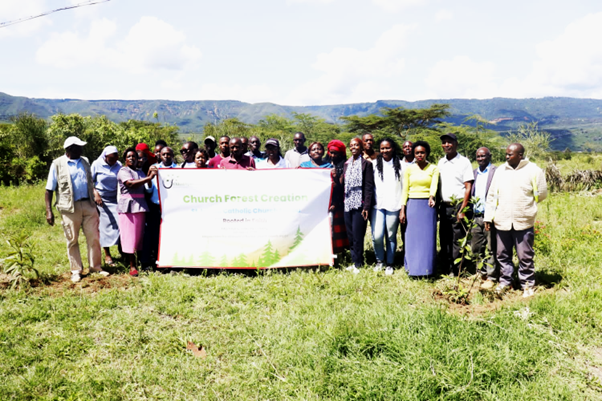
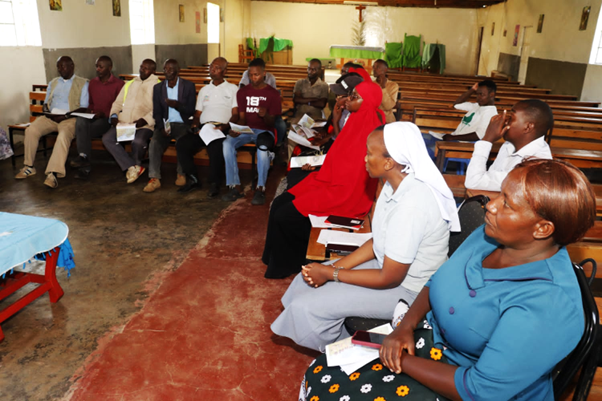
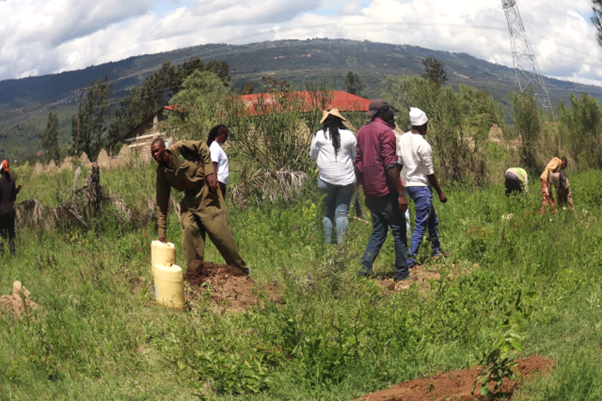
On any other Sunday, the St Joseph’s church grounds is a place people come to pray, worship together, and return home. On Monday morning, 30th March 2026, it carried a different kind of energy. The grounds of St Joseph Catholic Church Muniu filled up early. Familiar faces mixed with visitors from neighboring churches, a member of a local mosque, a local administrator, students from Hekima university and community representatives. A tree-growing expert, Mr Simon Kamonde, moved between small groups, manning the set up activities on the church land. Seedlings had been set out in rows along the dug pits. Tools rested off to one side. Conversations drifted from faith, land and weather. This was the day the church set aside land space for the first church forest within OikoDiplomatique’s church forest program.
A different kind of Church Visit at St Joseph Catholic Muniu
There was no rush to begin. People settled in slowly, greeting each other, taking in what had been organised. It didn’t feel like an event people had come to watch. It felt like something they were trying to place, something still forming.
The idea itself has travelled. In Ethiopia, forests have long been protected around Orthodox Tewahedo churches, held as sacred spaces and cared for over generations. Here in Mai Mahiu, that idea is being replicated.
Where the idea began
This moment traces back a few months. On 29th April 2024, flooding cut through the area causing lives to be lost, property destroyed and land in the affected area degraded. When we, alongside EOC-DICAC, visited afterwards for psychosocial support in December 2025, the conversations stayed with the community. Questions started to shift. Less about immediate fixes, more about what living with this land might require going forward.
Faith, responsibility, and the conversation in between
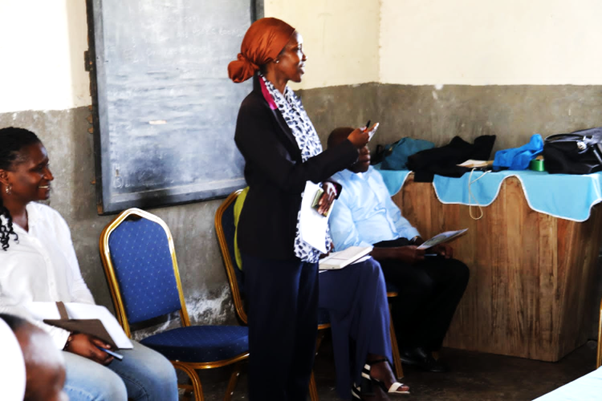
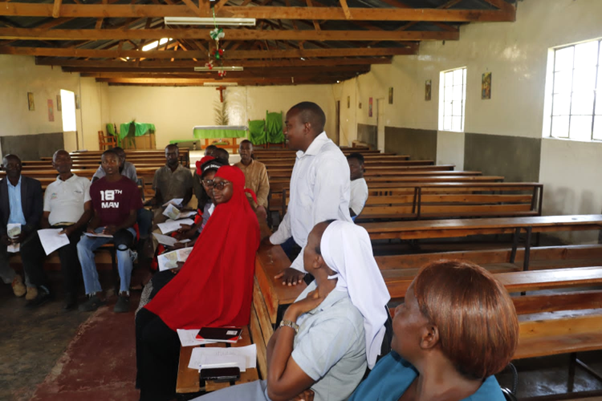
The programme of the day moved forward in its own rhythm. An opening prayer drew everyone in. Introductions followed. When the local administration spoke, the message stayed grounded in civic duty.
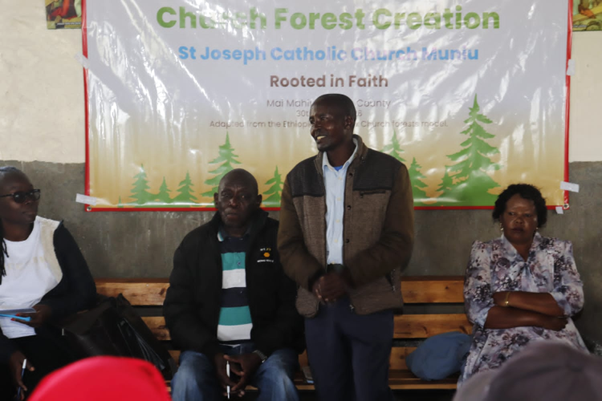
Reflections from Laudato Si’ were used to ground the church forest creation activity in theological thought. In this encyclical, Pope Francis calls for urgent care for “our common home,” highlighting that environmental degradation and social injustice are deeply interconnected. Rather than presenting environmental care as a new responsibility, this perspective affirms that it is already embedded within faith practice, the shift lies in making that commitment more visible and actively lived.
Learning from elsewhere, grounding it here
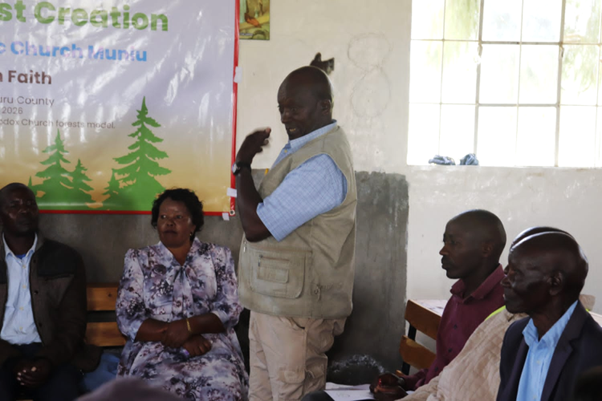
The Tewahedo Church model served as a point of reference. In this setting, forests are not separate from places of worship. They are part of them, protected, used, respected. In Mai Mahiu, the conversation stayed practical. What fits here? What needs adjusting? What would it take to sustain something like that in this context?
Actual planting
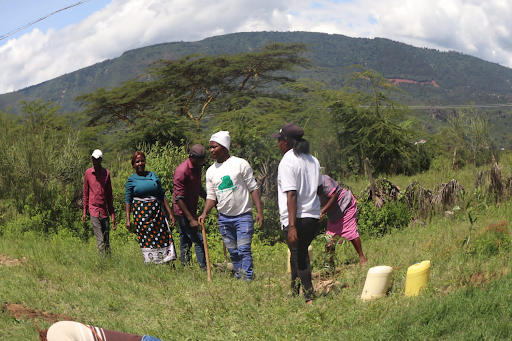
When the participants moved outside the church building, the tone shifted again. Mr. Simon Kamonde, formerly of KEFRI gave them lessons on how to prepare for planting and how to plant.
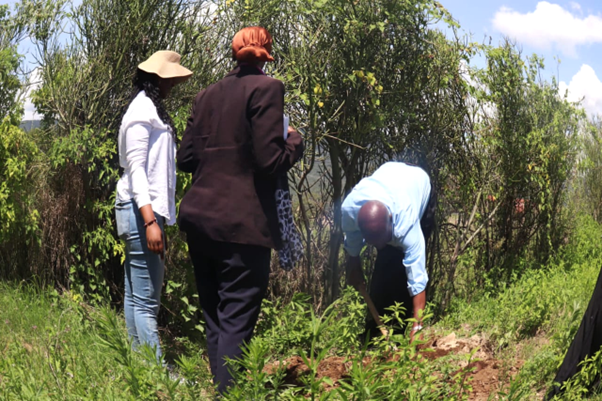
Small groups formed, then reformed. Some inspected the pitted areas, some prepared the seedlings for planting, others placed seedlings in the pits, others watched and asked questions.
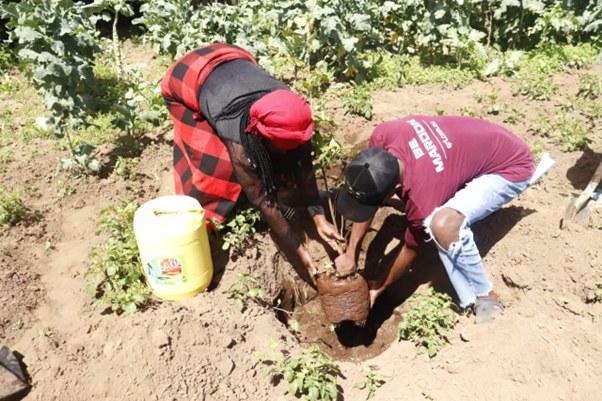
Most of the trees going in were local indigenous. Fruit trees and a few medicinal species were included, chosen with use and survival in mind.
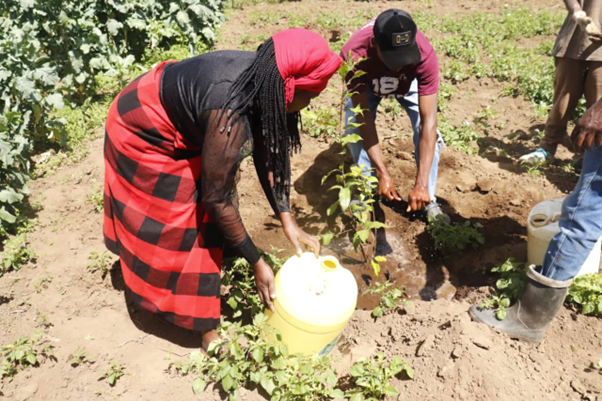
What happens after planting
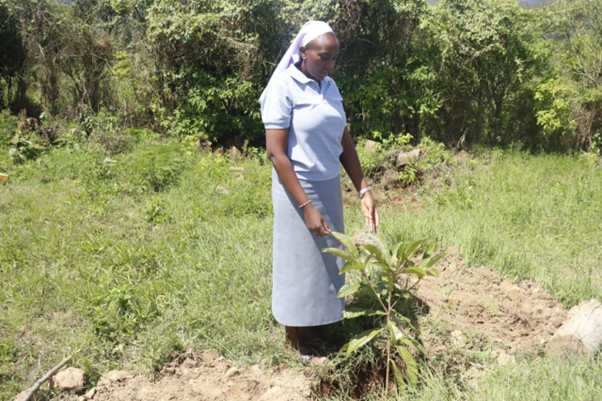
As the day wore on, attention turned to what comes next. Water. Protection from grazing. Keeping an eye on pests. Deciding who checks on what, and when. The details came up one by one, practical and necessary. This is the part that stretches beyond a single day. The part that decides whether the trees stay.
Memories of a Pre-colonial Mai Mahiu
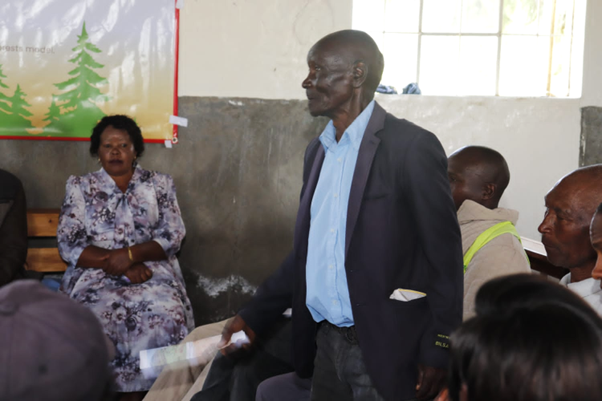
Later in the afternoon, a community elder in Muniu recounted his memories of a pre- colonial Mai Mahiu. He described a different Mai Mahiu. Dense with trees. Cooler. Less exposed. People moved through it differently. That version of the place didn’t disappear all at once. Trees went first in small numbers, then more. Charcoal burning picked up. Settlements spread. The change stretched over years, almost quietly, until the landscape no longer looked the same. He didn’t frame it as loss alone. It sounded closer to recognition of what has been altered, and what that means now.
More than trees
By the time people began to leave, the ground looked slightly different. 100 seedlings in marked spaces. Fresh soil turned over. There had been shared work. Shared conversation. A mix of people who don’t always occupy the same space, standing in one place and working through a common idea with all taking ownership of the trees they planted. Some were already talking about doing the same in their own areas. The site at St Joseph is still at the beginning. It will take time before it resembles what everyone envisioned from the mention of a church forest. For now, it sits as a starting point, quiet, steady, and open-ended. Something has been set in motion.